Counselling Approaches and Treatment Protocols
Cognitive Behavioural Therapy
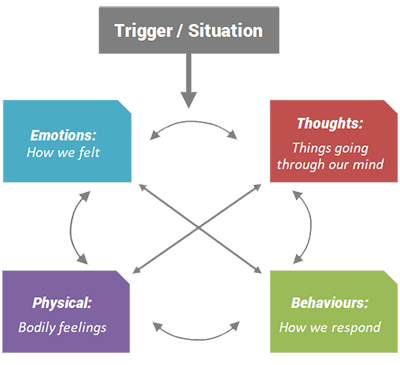
Cognitive Behavioural Therapy looks at how thoughts, feelings, physical sensations, behaviours, and situations interact. This is referred to as the five‑factor model. Through noticing how these areas connect and influence one another, clients can gain understanding of patterns, and begin experimenting with new, more helpful ways of responding.
The goal of CBT is to use evidence-based approaches to help a client become their own therapist. It is active and collaborative, with home practice used to help clients apply skills between sessions. Through this process, clients build a toolkit of practical skills: learning to question and shift unhelpful thoughts, finding new ways through problems, rebuilding day-to-day routines, and taking gradual, supported steps towards change.
CBT is a large volume of robust research, and widely regarded as one of the most effective therapeutic approaches available. CBT has proven consistently effective even within short-term, time-limited work, with a well-established evidence base spanning a broad range of difficulties including anxiety, depression, phobias, and low self-esteem. Through this approach, clients are supported to understand what keeps difficulties in place and to build practical, meaningful strategies for coping and long-term wellbeing.
Core Counselling Practices
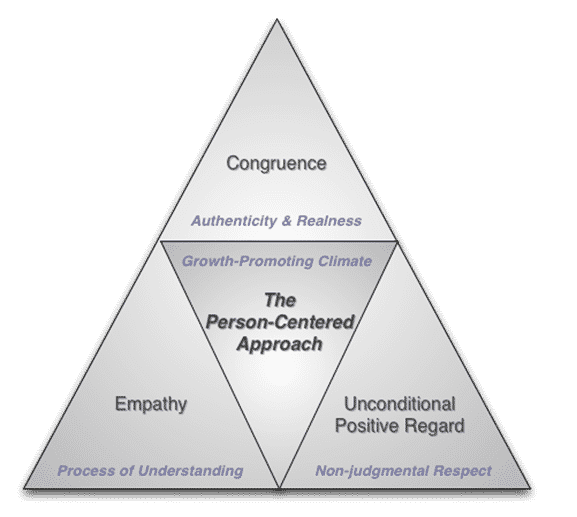
Central to core counselling practices are the values of unconditional positive regard for all clients, and a person‑centred, empathetic approach. In every session, you are welcomed with genuine warmth, respect, and heartfelt care. This helps to build a trusting environment where your perspective is central, and the therapeutic connection guides the work.
These practices are rooted in the work of Carl Rogers, who highlighted that clients have the best outcomes in therapy focused on empathy, authenticty, and support for their own innate capacity to move toward growth and change. He believed that when these conditions are present, it supports a natural progress towards greater authenticity, self‑understanding, and psychological wellbeing.
Acceptance and Commitment Therapy
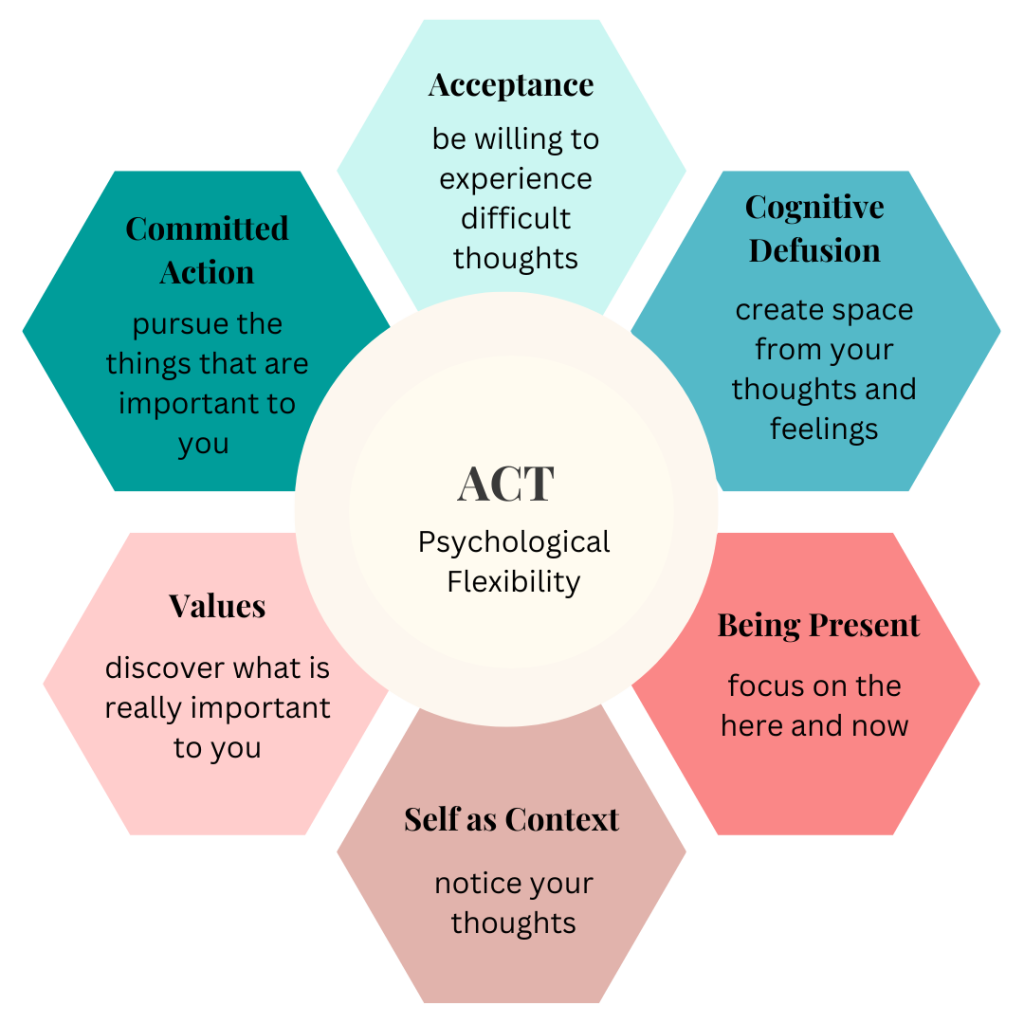
Acceptance and Commitment Therapy (ACT) is an evidence-based therapeutic approach centred on developing psychological flexibility. Rather than working to eliminate distress, ACT supports clients to build acceptance and self-compassion in the face of challenging circumstances.
Using compassion-based strategies and practical tools for behavioural change, ACT supports clients to take purposeful, values-led action and move toward what matters most to them.
It has been show to be highly effective for anxiety, depression, trauma, chronic pain, and long‑term health conditions, and can be adapted for individual, group, and self‑help formats. Additional research shows it to be particularly beneficial for neurodiverse individuals, individuals with OCD, and those facing challenging circumstances that are beyond their control. It places choice and resilience at the heart of the work, helping you to build a life shaped by your own values rather than driven by fear or avoidance.
Dialectic Behavioural Therapy (DBT)
Dialectical Behaviour Therapy (DBT) is a structured therapy that supports people with emotional dysregulation, distress tolerance, and greater self-awareness.
DBT takes a structured, skill-building approach built around four areas: mindfulness, distress tolerance, emotion regulation, and interpersonal effectiveness. Each are designed to help individuals manage intense emotions and navigate challenges more effectively. Central to DBT is the belief that genuine self-acceptance and the desire for change can coexist together.
Originally developed for individuals with borderline personality disorder, it has since demonstrated significant results for neurodiverse clients, as well as clients with anxiety, depression, eating disorders, suicidal ideation, and difficulties with substance use.

National Institute for Health and Care Excellence (NICE) Treatment Protocols
NICE treatment protocols provide clear, evidence‑based guidance on what works best for different mental‑health difficulties. They outline recommended interventions, session structures, and therapist competencies to ensure clients receive safe, effective, and consistent care. For psychological therapies, NICE emphasises approaches such as CBT, trauma‑focused CBT, EMDR, and structured behavioural treatments, depending on the presenting problem. These protocols help therapists deliver interventions that are grounded in research and aligned with national standards, supporting good outcomes and reducing variation in practice.
As a client, adherence to NICE guidance offer the reassurance that treatment is based on robust evidence and is delivered in a way that prioritises safety, effectiveness, and transparency.
Memberships and Ethical Standards
COSCA
COSCA sets recognised ethical standards for counselling and psychotherapy in Scotland, ensuring practitioners work safely, transparently, and with professional accountability. Membership demonstrates a commitment to high‑quality practice, ongoing development, and adherence to national guidelines.
BACP
BACP membership reflects a practitioner’s commitment to professional ethics, competence, and evidence‑based therapeutic work. It provides a clear framework for safe practice, accountability, and continuous professional development.
PPS
The Psychological Protection Society (PPS) provides comprehensive professional insurance that helps keep clients safe by ensuring all therapeutic work is fully covered and responsibly managed. Membership with PPS shows a commitment to safe, ethical practice and offers clients reassurance that their therapist is protected, accountable, and working to recognised professional standards.
ACBS
Membership with ACBS links therapists to a worldwide community committed to compassionate, evidence‑based approaches such as ACT. It reflects a dedication to ongoing learning, strong ethical standards, and therapeutic methods that support wellbeing, personal values, and meaningful change.